Top 24/7 SOC as a Service Company in India
We are a leading 24/7 SOC as a Service company in India delivering continuous security monitoring, advanced threat detection, SIEM management, and rapid incident response to protect enterprises from evolving cyber threats.
19
Feb
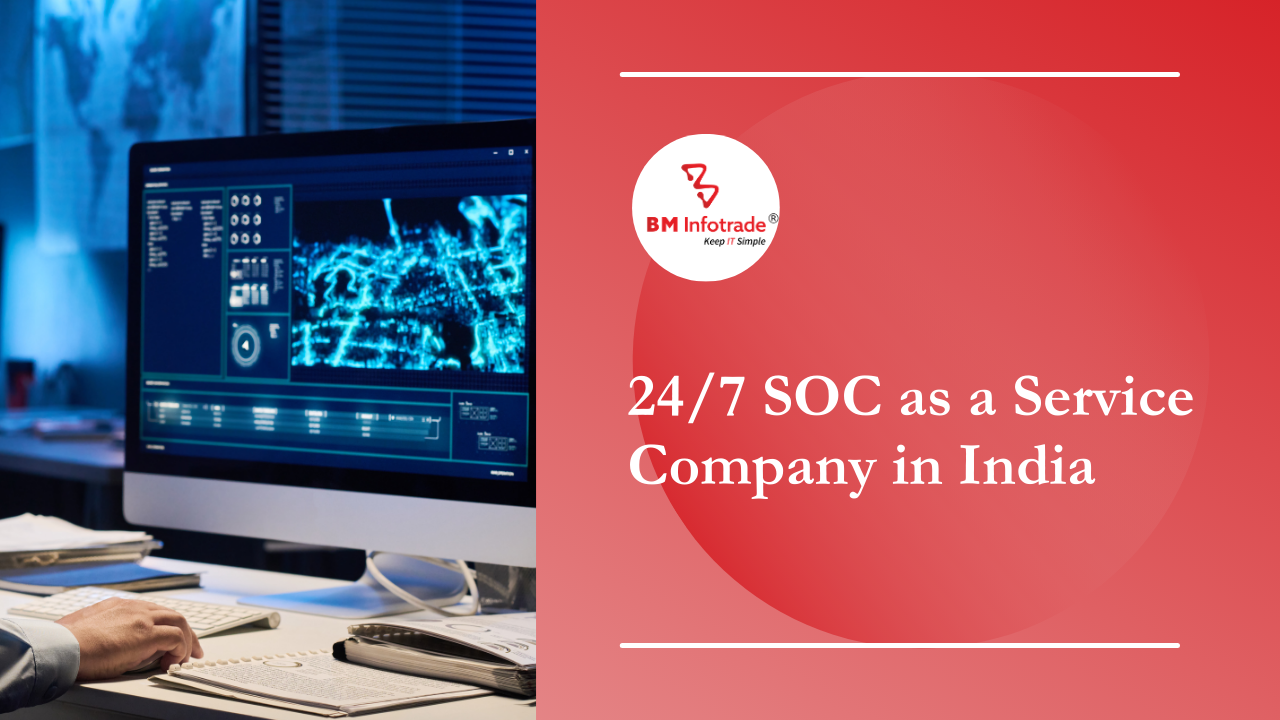
Top 24/7 SOC as a Service Company in India
Table of Contents
Cybersecurity is a 24/7 concern in India, with attacks occurring at all times of the day and night. Many businesses in India are turning to the option of Outsourcing Security Operations Centre services (SOCaaS). This allows you to outsource your SOC and have a highly skilled and trained team monitoring, detecting, investigating and responding to threats, continuously throughout the day and night, at a fraction of the cost and complexity of creating your own SOC.
Typically, SOCaaS companies in India combine a team of experienced security professionals working in shifts, SIEM (Security Information Event Management) or XDR (Extended Detection and Response), Threat Intelligence and Incident Process Workflows and Reporting, all as part of a subscription-based service with defined Service Level Agreements (SLAs). This model of service delivery allows your organisation to benefit from enterprise-level monitoring and Incident Response capabilities without the need to employ a full-time security staff, purchase a multitude of tools or have the overhead of maintaining your own Security Operations Centre.

What “24/7 SOC as a Service” actually means
A genuine SOC-as-a-Service includes way more than just sending out emails when there’s an incident. It is a continual method of monitoring the entire environment (endpoints, servers, Cloud workload(s), Network Devices, Identity Systems, Email Gateways, Business Applications). The SOC Team collects logs and telemetry data and correlates these to identify potentially suspicious patterns, and then performs triage to separate out false alarms from Real Incidents.
When they confirm an incident, the SOC-as-a-Service teams typically follow Playbooks: In some instances, they would isolate an affected endpoint; disable an account that is deemed to be in risk; block an IP address that has been identified as malicious; stop a malicious process(es); quarantine an email or raise a Critical Incident with the IT/Infosec Leadership with prescribed next steps. The best providers will also assist with actual containment, eradication, and recovery steps, not just detection.
Why Indian organisations are moving to SOCaaS
To create an internal company security operation center (SOC) that operates 24/7 requires the hiring of qualified individuals in many different roles including: analyst (level one [L1], level two [L2], level three [L3]), incident responders, threat hunters, SIEM engineers and SOC manager, plus the need for tools/integration/governance to support the operational activities of the SOC as the environment changes over time.
In terms of resources, the cost/effort associated with establishing an in-house SOC will be high, and many components need to be put into place. With a monthly service fee and the ability to quickly prepare for operations, many Indian organisations choose SOCaaS because it provides them with immediate analysis of their networks with respect to common threats, including business email compromise, ransomware footholds, cloud misconfigurations/insider risk signals and identity-based attacks.
Key components you should expect from a 24/7 SOCaaS company
An established SOCaaS Provider typically provides:
1. Log on-boarding and visibility setup: Connecting your key sources (e.g. firewalls, EDR/XDR (endpoint detection/response/extended detection/response), Microsoft 365 & Google Workspace, Cloud (AWS/Azure/GCP), VPN, IAM, Servers, Databases and Critical Applications). Good SOCaaS starts with visibility; without the ability to "see" you are unable to see 24/7.
2. SIEM/XDR operations: Either they will manage your existing SIEM or they will provide one of their own. This will include rule tuning, establishing use-cases, establishing correlation logic and health monitoring (to ensure logs continue to be collected).
3. Alert triage and validation: L1 analysts filter out the noise, validate suspected malicious activity and reduce false positive alerts. This is an area where many internal teams are losing a lot of time; SOCaaS is designed to eliminate this burden.
4. Incident investigation and support for response: L2/L3 analysts get into the incident in more detail, timeline analysis, look for lateral movement, review the process tree, examine email headers, conduct rudimentary endpoint forensics and make containment recommendations.
5. Threat hunting (optional but valuable): Threat hunting enables proactive searches for stealthy malicious activities that do not trigger obvious alerts. This is especially valuable in searches of identity abuse, and usage of legitimate tools, and activity by the cloud API that is out of the ordinary.
6. Vulnerability and Exposure context: Some SOCaaS providers connect their vulnerabilities and misconfigurations to the actual threat. Thus, priority should be on the fixes that will actually lessen this risk.
7. Reporting, Compliance Support, and Reviews: Dashboards (weekly/monthly), summaries of incidents that have been investigated and operational reviews. In India, these findings are often connected to audits, customer security questionnaires and regulatory expectations.
SLAs and response timelines that matter
Don’t just be impressed with a “we monitor 24/7” statement when you look at a 24/7 secure operations centre (SOC) as a service (SOCaaS) provider. Ask them what happens next after the detection of a threat.
The following should be clearly defined in the SOCaaS Provider:
1. Time to Acknowledge (TTA): The timeframe it takes an analyst to acknowledge an urgent alert.
2. Time to Triage (TTT): The timeframe it takes for them to validate whether the alert is actually a threat.
3. Time to Notify/Escalate: The timeframe it takes to notify an organisation's stakeholders with evidence and action plans.
4. Containment Support: Whether they can support the organisation in taking preventive measures to contain the threat or advise the organisation.
In addition, evaluate how the SOCaaS Provider will classify incidents (i.e.Critical/High/Medium/Low) and link the severity of alerts to specific triggers. An effective SOC will produce fewer but higher-quality alerts rather than sending out multiple distressing emails.
What makes a SOCaaS provider genuinely good (not just “managed alerts”)
An excellent SOCaaS company functions as if it were an extension of your business. In everything it does, from adjusting alerts to your specific needs to preparing effective incident reports by the IT department to providing seamless employee transitions between shifts to providing regular performance reports, there are numerous indicators of its superior service.
An established and reputable SOCaaS provider will:
1. Minimise false positives by developing a consistent software configuration based on years of experience.
2. Base detection profiles on your key assets (i.e. ERP solutions, financial applications, production servers, customer information, administrative logins).
3. Maintain incident response documentation (i.e. for common attack types such as phishing, impossible travel, malware execution, privilege escalation, unauthorised OAuth applications) as a resource for potential targeted attacks.
4. Provide post-incident evaluations detailing what went wrong, how to improve processes, and how to avoid future attacks.
A simple checklist before you sign up
When selecting a 24/7 SOC as a Service provider in India, be sure to determine:
1. Log sources and the number of logs (limits are important).
2. Whether or not they support your technology stack (e.g., cloud, EDR, email security, IAM).
3. Are they only providing advisory assistance during the incident response phase, or do they also offer direct assistance with containing the incident?
4. What will be the residency and control of your data?
5. What will be the type of reporting offered (i.e., frequency, escalation path for your stakeholders), and what will their on-call coverage be?
6. How long will it take to onboard them, and what will you need to provide them access, agent installation, etc.?
Conclusion
A 24/7 SOC as a Service is one of the fastest ways for Indian organisations to reach enterprise-grade security operations without building a costly in-house SOC. The right provider will give you continuous monitoring, smarter detection, and structured incident response so threats are handled like operational events, not late-night surprises. If you treat SOCaaS as a long-term partnership (not just a tool subscription), it can significantly improve your security posture, reduce downtime risk, and keep your internal teams focused on business-critical work.
FAQs
1. What is 24/7 SOC as a Service?
Managed cybersecurity services with Round-the-clock Threat Monitoring/our Preferred Service (SOCaaS) provide clients with 24/7 protection from cyber threats by providing a dedicated team (SOC) that monitors, detects, and responds to these threats for the client.
2. How is SOC as a Service different from an in-house SOC?
SOCaaS takes away the need for clients to hire internal staff, purchase expensive software tools or products, and work in shifts internally to secure their information and assets. By utilising this service, clients receive the same level of consistency at a lower and predictable price.
3. Who should use SOC as a Service in India?
This service will be ideal for mid-size companies and start-ups, as well as for vendors in finance/insurance, healthcare, SaaS, and manufacturing sectors that require significant security but do not want to establish an entire SOC on their own.
4. What does a 24/7 SOC monitor?
Security Operations Centres (SOC) offer monitoring of endpoint devices, servers, network components, cloud workloads, emails, user identities, critical business applications and data.
5. Does SOC as a Service help with incident response?
The SOC will investigate alerts generated by the customer, confirm any related incidents, provide advice to contain any confirmed incidents, and recommend an approach to recover from those confirmed incidents.
Anshul Goyal
Group BDM at B M Infotrade | 11+ years Experience | Business Consultancy | Providing solutions in Cyber Security, Data Analytics, Cloud Computing, Digitization, Data and AI | IT Sales Leader