
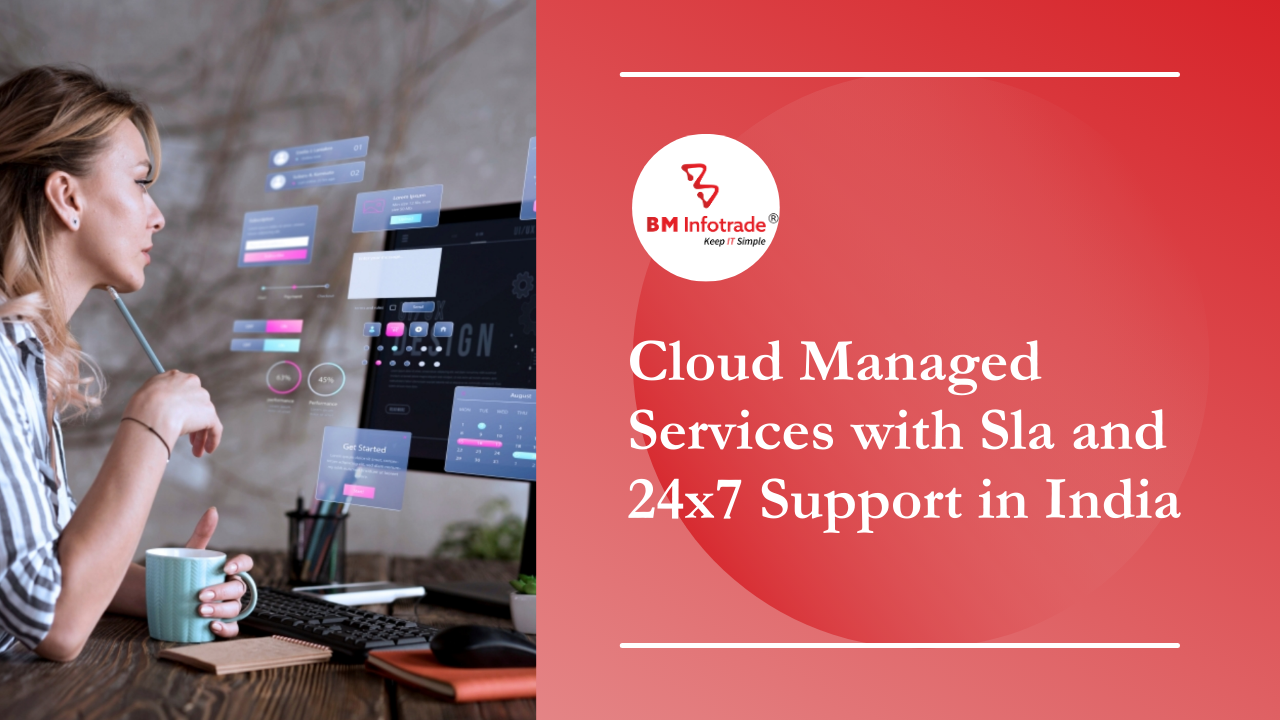
Top Cloud Managed Services with Sla and 24x7 Support in India
Cloud Managed Services in India that ensure high performance, security, and reliability with guaranteed SLAs and 24x7 expert support. Optimize your infrastructure, reduce downtime, and focus on business growth while certified professionals manage your cloud environment.
12
Feb
Top Cloud Managed Services with Sla and 24x7 Support in India
Table of Contents
- What Are Cloud Managed Services?
- Importance of SLA-Driven Cloud Managed Services
- Role of 24×7 Cloud Support in Indian Businesses
- Key Components of Cloud Managed Services in India
- Benefits for Indian Enterprises
- Who Should Use Cloud Managed Services?
- Choosing the Right Cloud Managed Service Provider in India
- Conclusion
- FAQs
As Indian businesses transition to the cloud, the issue of "Do we go to the cloud?" has shifted to "How can we reliably run cloud-based systems at scale?" The current role of cloud infrastructure includes running mission-critical workloads like ERP, fintech, e-commerce, healthcare, and artificial intelligence. A failure or outage in any of these areas (whether due to security, performance or downtime) has a direct effect on the revenue generated and the customer's trust in the company, and can lead to consequences beyond revenue loss; the potential for compliance violations is real.
For Indian businesses, Cloud Managed Services have become vital, with the added benefit of providing SLA guarantees and 24×7 support. In addition to these benefits, Cloud Managed Services provide ongoing management of cloud resources after initial migration to the cloud. These services are designed to continually optimise and secure existing cloud environments while helping companies maximise their return on investment, thereby maintaining cost efficiency, security, and overall integrity of the cloud environment.

What Are Cloud Managed Services?
A dedicated service provider is responsible for the ongoing management of cloud infrastructure and applications on behalf of a customer. This type of cloud managed service includes the monitoring, maintenance and improvement of cloud infrastructure and applications, such as backups and disaster recovery, in addition to cost management and security services.
In India, cloud managed services support public, private and hybrid environments and are typically built around the AWS platform, Microsoft Azure, Google Cloud and the combination of these three platforms with an on-premises data centre. Cloud managed services enable businesses to focus on growth while cloud experts manage the day-to-day running of their businesses and provide expert risk management services.
Importance of SLA-Driven Cloud Managed Services
- 1. A Service Level Agreement (SLA) sets forth expectations regarding quality, reliability and accountability of cloud operations. For Indian enterprises that are operating across multiple time zones, customer segments and regulatory frameworks, SLAs are not a choice; they are a necessity.
- 2. An SLA typically outlines uptime guarantees, the speed of response to incidents, the timeframe for incident resolution, the process for escalating incidents, and the criteria for issuing service credits in the event of issues. For example, an SLA may guarantee that a service will be available at least 99.9% of the time, thereby minimising any disruption to a business. In addition, SLAs will indicate how quickly incidents will be acknowledged and resolved; this is particularly important during peak business hours and peak sales periods (festivals) in India.
- 3. When businesses have clear SLAs in place, they can establish transparency and trust regarding cloud operations. SLAs help businesses measure the performance of their service providers and establish accountability for service levels.
Role of 24×7 Cloud Support in Indian Businesses
Indian businesses have had to adapt to a global economy powered by technology and digital media. This has led to the need for constant availability of cloud services and the ability to react nearly instantly when problems arise (no matter where in the world they occur). In India, it is common to have multiple different types of business systems running concurrently (i.e. older systems, new cloud-native applications and applications that integrate with companies from Canada, the USA, or another country), so cloud services need to provide this level of service.
With all these different types of workloads constantly being managed in India by providing 24/7 support for cloud services, it allows users to detect problems early, prevent disruptions in service and maintain their performance during extreme workloads such as large sales campaigns, financial closing dates, or the completion of regulatory reports.
Key Components of Cloud Managed Services in India
- 1. In terms of infrastructure management (compute, storage, network & load balancer), Cloud Managed Services (CMS) encompass the oversight of all hardware and software provided by Cloud Service Providers (CSP). CMS also provides cloud customers with the ability to monitor the health of their own systems through the application of updates, addition/removal of resources, scaling, and active (as needed) resource usage optimisation.
- 2. Another area in which CMSs support requires further explanation is that CMS offers Security Management, which encompasses Identity and Access Management (IAM), Vulnerability Assessments, and Firewalls. Additionally, CMS assists organisations with ensuring compliance with India's laws and regulations, including the Data Localisation Norm.
- 3. Additionally, Cost Optimisation is a major area of focus for Indian companies when utilising CMSs. Managed Services Providers (MSPs) are continuously reviewing the patterns of resource usage to identify and eliminate sidelines; to optimally size their resources according to current and projected resource usage; and recommend strategies to reduce/ eliminate the cost of excess resource use.
- 4. CMS services also cover Backup and Disaster Recovery (BDR) Management, thereby providing business continuity, as BDR includes Automatic Backup, Recovery Plan Testing and Replication of cloud customer data for protection against both cyber-attacks and infrastructure failure.
Benefits for Indian Enterprises
- 1. Cloud-managed services alleviate the complexities associated with operating an internal IT department. Rather than maintaining a large internal IT operations team, cloud-managed services enable businesses to benefit from the expertise of certified cloud professionals with a comprehensive knowledge base of their technology and solutions.
- 2. Cloud-managed services enhance the reliability and availability of applications through the implementation of proactive monitoring and SLA-based accountability guarantees. This is advantageous to customer-facing applications since even short downtimes caused by outages could negatively affect an organisation's reputation.
- 3. Managed services can substantially improve security by establishing standardised practices, continuous audits and an improved incident response capability because of the cyber threat landscape that exists today.
- 4. Managed services provide businesses with a predictable, transparent cost structure. Plus, for Indian businesses and startup and mid-market companies, cloud-managed services help eliminate wastage as a result of poorly managed clouds and maintain optimal cloud performance.
Who Should Use Cloud Managed Services?
Cloud-managed services are an ideal solution for companies running production workloads and dealing with regulations from industries like banking and financial services, healthcare and rapidly growing SaaS companies, as well as for companies that have implemented hybrid and multi-cloud scenarios.
Cloud-managed services are an additional resource for those organisations that do not possess the skill set to operate their own cloud environments or who are looking to upgrade their IT operations capabilities without assuming operational risk.
Choosing the Right Cloud Managed Service Provider in India
In selecting a service provider, Indian businesses need to consider who has committed to strong SLAs, proven their ability to support their customers & clients 24 hours a day, 7 days a week, has a team of certified Cloud professionals, and has experience in meeting the various Indian regulations and compliance requirements.
Having a local presence with the ability to draw upon global Cloud expertise is a significant advantage for your business. A provider with an understanding of Indian business hours, any escalation expectations, and nuances that may be unique to your industry will provide more consistent and reliable results for your organisation.
Conclusion
The adoption of Clouds in India has progressed from being an experimentation phase to being critical for business success. Moving forward, any Cloud Managed Service with a corresponding SLA and 24×7 support will not only be critical to the success of your organisation's continued operations, but will also be essential to keeping your business sustainable, secure and able to grow.
By working with a trusted Cloud Managed Service provider, Indian organisations can have peace of mind knowing they have a highly available, secure environment with predictable ongoing service costs while concentrating their resources on the creation of new products and services that generate greater value for their customers.
FAQs
1. What are cloud-managed services?
Ongoing management, monitoring, optimisation and security of cloud applications and infrastructure will be managed by a vendor organisation that is an expert service provider.
2. What does SLA mean in cloud-managed services?
An SLA (Service Level Agreement) will outline the level of uptime guaranteed by the provider, how quickly the provider will respond to a customer's needs, how long it will take for an issue to be resolved and how the vendor will be held accountable for delivering the service to the customer.
3. Why is 24×7 cloud support important in India?
Businesses operating in India are using digital platforms and are typically operating across multiple time zones. Providing a customer with 24-hour, 7-day-a-week access to support allows for immediate response and continuous monitoring of potential issues.
4. Which cloud platforms are covered under managed services?
Most cloud managed service providers will support the following cloud environments: AWS, Microsoft Azure, Google Cloud and hybrid or multi-cloud environments.
5. How do cloud-managed services help reduce costs?
In addition to optimising how cloud resources are used, the vendor will also identify idle infrastructure, recommend the optimal size for a business's cloud environment and prevent unplanned cloud overspending.


Anshul Goyal
Group BDM at B M Infotrade | 11+ years Experience | Business Consultancy | Providing solutions in Cyber Security, Data Analytics, Cloud Computing, Digitization, Data and AI | IT Sales Leader